Wooded Acreage That Finally Works for You
Brush clearing in White House for rural properties where dense underbrush has made wooded back lots impassable or unsafe
TCS Land Management clears underbrush and brush on wooded acreage in White House, handling everything from dense understory buildup to fire mitigation clearing on rural properties. The owner runs the crew on site with his own skid steer and equipment fleet, so the person who assessed the land is the same person directing the work as it happens. Property owners with wooded back lots where growth has closed off access, compromised sight lines to fences, or created fire risk along the property edge are the primary situations this service addresses.
Before the crew starts, remove-or-leave decisions and debris handling are settled so the cleared area reflects what the property actually needs rather than a default approach. The skid steer works the underbrush from the ground up, cutting back growth to the agreed boundary in passes that leave the area clean enough to walk and usable for whatever comes next. Rural acreage in this part of the county tends to have dense understory that builds up quickly between tree trunks and fence lines, and clearing that growth in sections prevents damage to the timber the owner wants to keep standing.
Request an on-site evaluation of your wooded acreage to establish clearing limits and debris handling before any work begins.
What Brush Clearing Actually Accomplishes on Rural Land
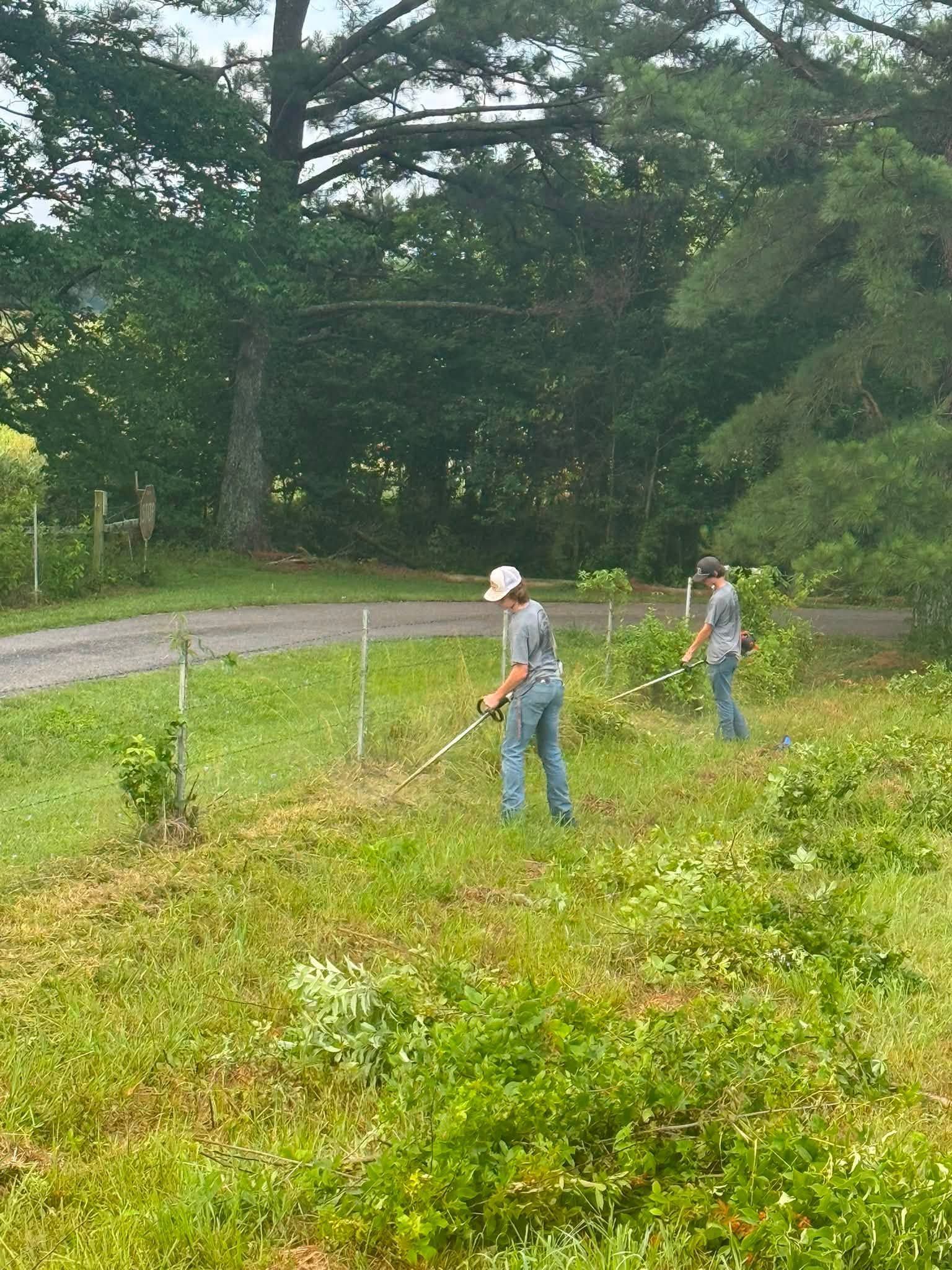
Brush clearing done with a skid steer and crew operates differently than hand clearing alone. The skid steer moves through established understory and cuts volume that would take days by hand, while the crew handles cutting at the boundary lines and around anything that stays. The sequence matters: agreeing on the clearing edge before the first pass means the crew is not making decisions about your timber mid-job.
After clearing, the difference is visible and functional. The canopy remains, the wanted trees stand, and the ground between them is open. Fence lines that were buried in growth become accessible for inspection and repair. Fire mitigation clearing leaves a defensible gap between the wooded area and structures or the property edge. Debris is handled the way the customer asked at the start, so there are no piles left in spots nobody agreed to.
The owner posting real progress from his own jobs means you can see how cleared areas actually look before contacting TCS Land Management, which gives you a concrete reference point when describing what you want for your own property. Clearing scope varies based on timber density, the agreed boundary, and what the land will be used for once the underbrush is gone.
What Property Owners Ask About the Work
Wooded acreage on rural lots in White House presents specific clearing questions that depend on timber density, fence proximity, and how the cleared land will be used afterward. The answers below address the work itself.
What equipment is used to clear underbrush on wooded acreage?
A skid steer handles the volume clearing while the crew manages boundary cutting and anything that needs hand work around trees or fencing. The combination lets the job move efficiently without damaging timber you want to keep standing.
How are remove-or-leave decisions handled before clearing starts?
Every debris and timber decision is settled on site before the crew begins, so the cleared area reflects your instructions rather than a default. This includes what gets cut, what stays, and where debris goes.
What does the land look like after brush clearing is finished?
The canopy and selected trees remain standing, ground-level growth is cut back to the agreed boundary, and the area is walkable and open. Fence lines and property edges that were obscured by understory become visible and accessible.
Why does clearing sequence matter when timber is close to the boundary?
Cutting from the interior toward the boundary edge reduces the chance of damaging standing timber during removal. On White House rural properties where wooded back lots sit tight against fence lines or outbuildings, this sequencing protects structures and property markers.
How is fire mitigation clearing different from standard underbrush removal?
Fire mitigation clearing targets continuous fuel sources between wooded areas and structures or property lines, creating breaks that interrupt potential fire spread. The clearing depth and width are set to the specific gap the property requires rather than a fixed standard distance.
TCS Land Management also performs brush clearing in Portland, Springfield, Gallatin, and Cross Plains. To discuss clearing limits, debris handling, and how your wooded acreage will be used after the work is done, contact TCS Land Management directly at (615) 723-7405 to schedule a property walkthrough.