
Building Sites Cleared From Timber to Ready Ground
Land clearing in White House for rural acreage where timber and brush have to come out before anything else can start
Rural acreage that has never been developed carries timber, brush, and root mass across ground that a building site or driveway access route eventually has to occupy. That material does not move itself, and how it comes out determines how clean the ground is for the next phase of work. TCS Land Management clears lots and building sites on rural acreage in White House, including back lots and driveway corridors, with the owner operating his own skid steer and crew through the full clearing sequence. The process runs from initial clearing through grading and site prep, so the same crew that takes out the timber is the crew that shapes the ground for what goes in next.
Every clearing job starts with marked limits and an agreed access route before the first cut. Trees and brush come out in order, working from the clearing edge inward, so the debris path does not cross finished ground twice. How much timber stays on site and how debris is disposed of are confirmed before work begins, which keeps the scope fixed and the finished site condition predictable. In a market where most rural parcels in this area were never graded for development, the cleared and graded result is the first time that land has been shaped to a plan.
Schedule a site walk to mark clearing limits and confirm debris handling before the crew mobilizes.
The Difference Between Cleared Ground and Build-Ready Ground
Clearing removes what is above and at ground level, but build-ready ground also requires what is below: roots and stumps that stay in place will shift under any structure or compacted surface over time. The crew at TCS Land Management accounts for this in how the clearing scope is set, distinguishing between areas where surface clearing is sufficient and areas where the root mass has to come out before grading begins. That distinction is made site-specifically, not applied as a blanket rule.
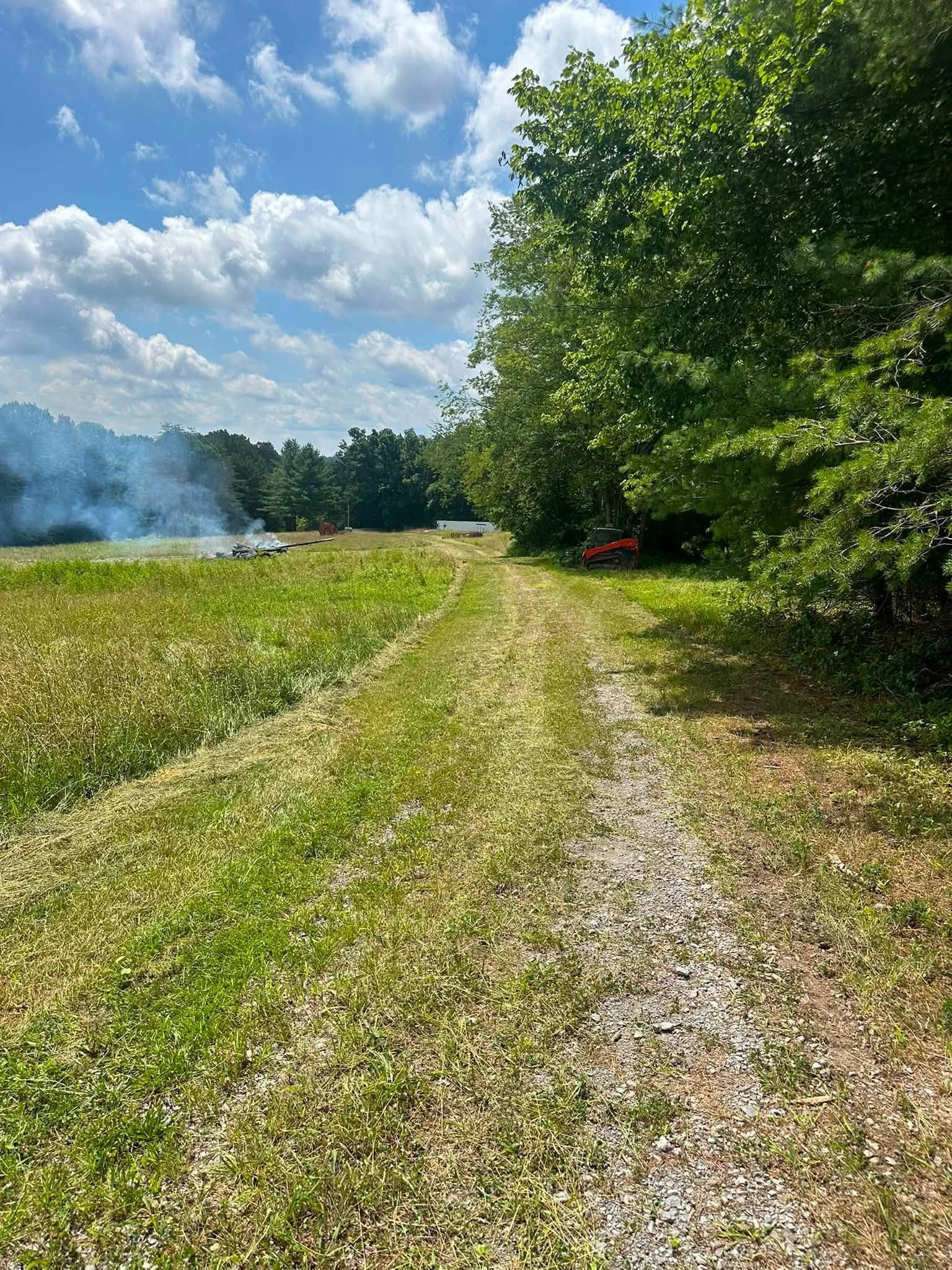
Once clearing is complete, the site is visibly different in two ways: the footprint is open and the debris is handled. Open means no standing timber, no brush canopy, no fallen material blocking access within the agreed boundary. Debris handled means it went where you asked—piled for burning, removed from the property, or left as agreed—not wherever the crew found convenient. The site is then ready for grading, which is the next step in converting raw acreage to a usable building platform.
Clearing scope on rural parcels near Portland and Gallatin varies based on timber density, the number of stumps inside the clearing boundary, and whether the cleared area connects to an existing access route or requires a new one. These factors affect how the job is sequenced and how long the clearing phase runs before grading can begin.
Common Questions About How the Work Is Done
Land clearing for building sites and back lots on rural acreage involves sequencing decisions that affect the finished condition of the ground. The questions below address the clearing process and what determines how each job is approached.
How are clearing limits established before the crew starts?
Clearing limits are marked on site before any equipment moves, based on the agreed footprint for the building site, driveway, or back lot. The crew works to those marks rather than making boundary decisions during the job.
What determines whether stumps need to come out during clearing?
Stumps and root mass in a building footprint or driveway corridor have to be removed because they will shift under compacted fill or a slab. In areas outside the active build zone, they may be able to stay depending on what the land will be used for after clearing.
How does the debris removal sequence affect the finished site condition?
Working from the clearing edge inward keeps the debris path separate from already-cleared ground, so the crew is not dragging material across areas that are finished. This matters most on larger parcels where the clearing boundary is well inside the access point.
What is confirmed with the property owner before the first cut?
Clearing limits, the access route the equipment will use, how debris is handled, and how much timber stays on site are all confirmed before work begins. Changes to any of these after the job starts affect both the scope and the finished condition.
How does land clearing on White House rural acreage connect to the grading phase?
Clearing removes the material above and at grade; grading then shapes the exposed ground to the elevation and slope the build requires. Running both with the same crew and equipment means the cleared site is handed directly into grading without a separate mobilization.
TCS Land Management also performs land clearing in Portland, Springfield, Gallatin, and Cross Plains. To walk the property, mark clearing limits, and confirm debris handling before any equipment arrives, call TCS Land Management at (615) 723-7405.