Water That Pools Against Your Foundation
Drainage Solutions in White House for lots where grading sends water toward structures or neighboring yards
Standing water against a foundation or pooling along a fence line is rarely a pipe problem—it is a grading problem left over from how the lot was shaped years ago. TCS Land Management assesses each site with the owner on-site, using his own excavation equipment, to trace exactly where water originates and where it needs to exit. Older properties in White House frequently have lots graded to standards that predate current drainage expectations, and correcting that means reshaping the ground rather than dropping in a catch basin and hoping for the best.
The crew walks the lot first to identify the high points, the collection zones, and the natural fall available on the property. From there, a trench is cut or the surface is regraded to establish a path with consistent fall away from structures. Pipe, gravel, and filter fabric are placed in the trench, the outlet is positioned where it can discharge without creating a downstream problem, and disturbed lawn areas are restored. Whether the quote covers outlet placement and lawn restoration is worth confirming in writing before work begins.
Schedule a site evaluation with TCS Land Management to trace your specific drainage path and identify where water is collecting against your property.
How Proper Drainage Addresses Grading and Flow
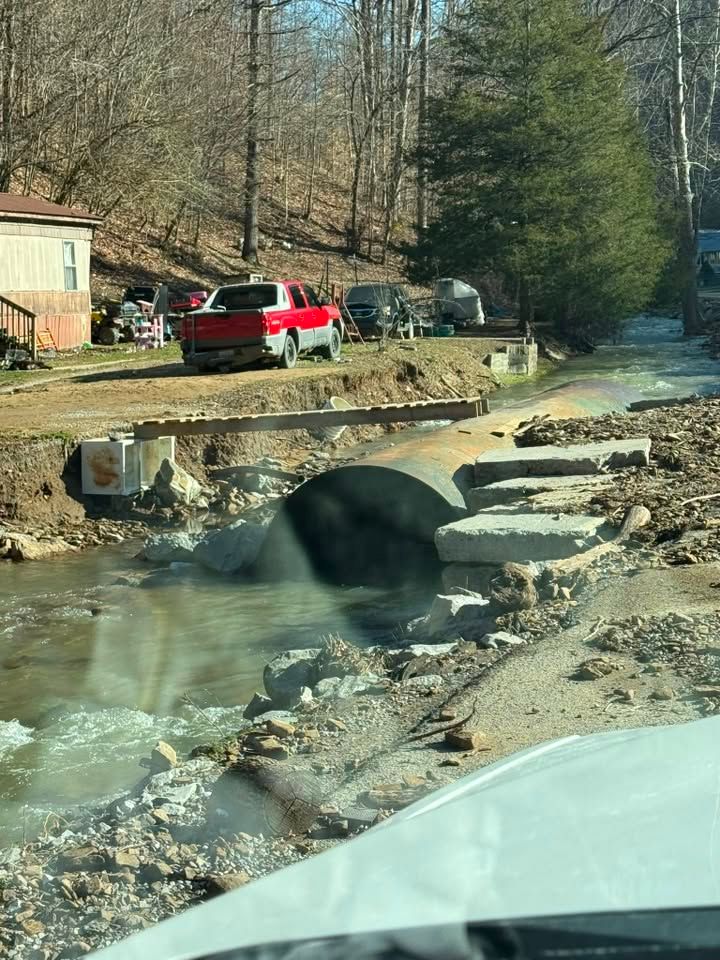
Drainage work that actually holds up starts with understanding surface fall—how much slope exists, whether it moves water toward or away from the structure, and where the ground is flat enough to allow ponding. On lots where the original grading sent water toward the house rather than away from it, adding a surface pipe without correcting the grade typically shifts the problem rather than resolving it. The crew evaluates both the inlet side and the outlet side before any excavation begins.
Once the trench is set and backfilled, the visible change is straightforward: water that previously sat against the foundation or ran toward a neighbor's yard now moves along the intended path and exits at the outlet point. The lawn surface is restored so the work is not obvious once grass reestablishes, but the functional difference shows up in the next heavy rain when the problem areas stay dry.
Because TCS Land Management operates as an owner-run business with one to two crew members, the person who assessed the lot is also the person operating the equipment during excavation. That continuity matters when the work requires adjusting the trench line mid-job because the actual ground conditions differ from what the surface suggested—a common situation on older residential lots where fill depth and compaction history are not documented.
What Property Owners Ask About Drainage Work
Drainage projects on older White House properties often raise practical questions about what the work involves and what to check when it is finished. The answers below address the service itself.
What does the site walk actually determine before excavation begins?
The crew traces where water enters the problem area, identifies the available fall across the lot, and locates a viable outlet point—these three factors together determine whether the fix is a surface regrade, a buried pipe, or a combination of both.
Why does filter fabric matter in a drainage trench?
Filter fabric separates the gravel from the surrounding soil so fine particles do not migrate into the aggregate over time and reduce the permeability of the drainage layer—without it, a trench that flows freely at installation can become blocked within a few years.
How does lot grading from decades ago affect the drainage approach on older properties in White House?
Lots graded in earlier decades were often shaped to match the building footprint rather than to move water efficiently off the property, which means water management was not part of the original design and has to be retrofitted around existing grades and structures.
What should you check once the drainage work is complete?
Walk the outlet point after the first significant rain and confirm water is exiting there rather than surfacing mid-run, which would indicate a low point in the pipe or a grade reversal in the trench.
When is surface regrading the right fix rather than a buried pipe?
When the lot has enough fall to move water away from structures without a collection point, reshaping the surface profile is more durable than a pipe system because there are no inlet grates or pipe joints to maintain or clear.
TCS Land Management also performs drainage work in Portland, Springfield, Gallatin, Cross Plains, and Nashville. To discuss the grading conditions on your specific lot and what a corrected drainage path would look like, call TCS Land Management at (615) 723-7405 to arrange a property walkthrough.