Ground Shaped to a Plan Before Building Starts
Grading in White House for rural lots and farm-edge properties where uneven ground has to be shaped before a structure, driveway, or slab can go in
Grading is the step between a cleared site and a surface that will actually support what goes on top of it. On rural lots and older farm-edge properties in White House, the ground frequently carries the shape of past agricultural use: low spots from equipment travel, berms from old drainage work, and surface variation that looks minor until a driveway base or building slab has to sit on it. TCS Land Management grades building sites and rural lots using a skid steer, with the owner running the grading himself so the person shaping the ground is the same person who planned the finished elevation and knows where it has to end up.
Grading starts from the cleared site and works by cutting and filling to the agreed grade, with the operator checking the surface as the work proceeds rather than at the end. Material moved on or off the site is confirmed with the owner before the job begins, so there are no surprises about spoil disposal or fill brought in. Rural parcels in areas like Springfield and Cross Plains that were previously used for pasture or row crops often have compaction patterns and subsurface variation that affect where cut-and-fill decisions get made, and those conditions are assessed on the ground rather than assumed from the surface.
Set up an on-site review of your lot to establish the target grade and confirm what material moves before the skid steer arrives.
What Proper Grading Requires on Rural Lots
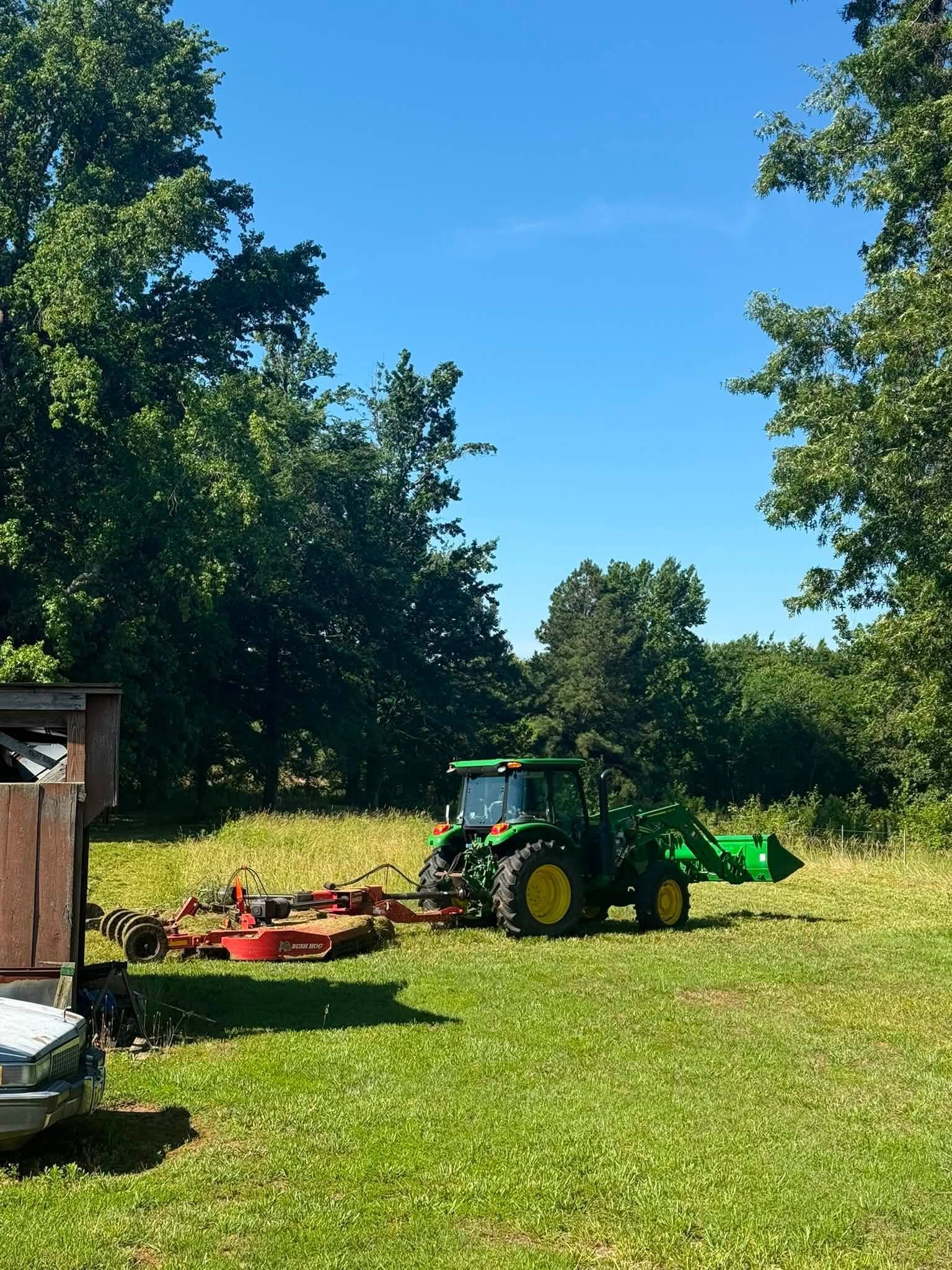
A finished grade is not just a flat surface. It has to drain, carry load without settling, and match the elevation requirements of whatever structure or driveway goes in above it. Achieving that means the operator is making cut-and-fill decisions continuously across the site, not just running the machine in passes and calling the surface level. The skid steer gives the operator direct feedback on what the ground is doing underfoot, which matters more on previously used farm-edge property than on a greenfield site where the subsurface is more predictable.
After grading, the finished surface is measurably different from the raw cleared ground: standing water drains rather than pooling, the elevation is consistent with the build plan, and the surface is stable enough for the next phase of work to proceed without rework. TCS Land Management's owner posting real job progress means you can see what a finished grade from the same equipment and operator actually looks like before committing to the work.
Material decisions matter as much as machine operation. Whether spoil is hauled off site, spread in a designated area, or used as fill elsewhere on the parcel affects both the finished grade and the cost of the job. Those decisions are made before the first cut so the scope is fixed and the finished site condition is predictable from the start.
Questions Before Starting Your Project
Grading on rural lots in White House involves decisions about surface elevation, material handling, and how the finished grade connects to the next phase of construction. These questions address the work itself and how those decisions get made.
How does the operator check the grade as the work proceeds?
The skid steer operator reads the surface continuously during cutting and filling, adjusting passes based on the actual ground condition rather than working from a fixed plan that assumes uniform soil. On properties with irregular compaction from past use, this ongoing adjustment is what produces a consistent finished surface.
What is the difference between cutting and filling during grading?
Cutting removes high material to bring an area down to the target elevation; filling adds material to bring a low area up. On uneven rural lots, most grading jobs involve both, and where the cut material ends up is part of the scope agreed before the job starts.
When does grading happen relative to clearing and excavation?
Grading follows clearing and any excavation that is part of the site prep. The cleared surface needs to be free of stumps, roots, and debris before grading can produce a finished result that holds. On jobs where TCS Land Management handles both clearing and grading, the transition between phases is managed without a separate mobilization.
How does previous agricultural use of a White House rural lot affect the grading approach?
Pasture and row crop land often carries compaction patterns from equipment travel and variable subsurface conditions from tillage depth changes. These affect where the ground will hold a grade and where additional fill or reworking is needed, which is why the assessment happens on site rather than from a topographic map alone.
What should the finished grade look like before a slab or driveway base goes in?
The surface should be at the target elevation, drain away from the structure footprint, and show no visible low spots that would pool water under the base material. A consistent, stable surface at grade is the standard the operator works to before the job is called complete.
TCS Land Management also grades lots in Portland, Springfield, Gallatin, and Cross Plains. To review your site, set a target grade, and confirm material handling before work begins, call TCS Land Management at (615) 723-7405.