
Trees Down Without Damage to What Stays
Tree removal in White House for rural lots where trees sit close to fences, outbuildings, or planned driveway routes
Single hazard trees and groups of trees standing in the way of a building site or driveway represent two distinct problems, but the planning requirement is the same: someone who understands drop zones, cut sequencing, and debris flow has to be on the land before the first cut. TCS Land Management handles tree removal on rural lots and wooded properties in White House, from isolated hazard trees to multi-tree clearing for access routes and build sites. The owner runs the crew on each job, so the same person who walked the land and planned the removal is directing the cuts and the cleanup throughout.
Each removal starts with a look at the tree and the drop zone before any cutting begins. Older farm-edge properties in this area frequently have trees positioned close to existing fences, outbuildings, and the likely path of a future driveway, which means the drop zone analysis drives the entire cut sequence. The crew works in sections using the lowest-risk sequence for that specific tree and site, clearing debris as the work proceeds. Stump handling and final cleanup are quoted separately from the removal so you know exactly what each part of the work covers.
Arrange a site visit to evaluate the tree position, the available drop zone, and what the removal scope includes before any work is scheduled.
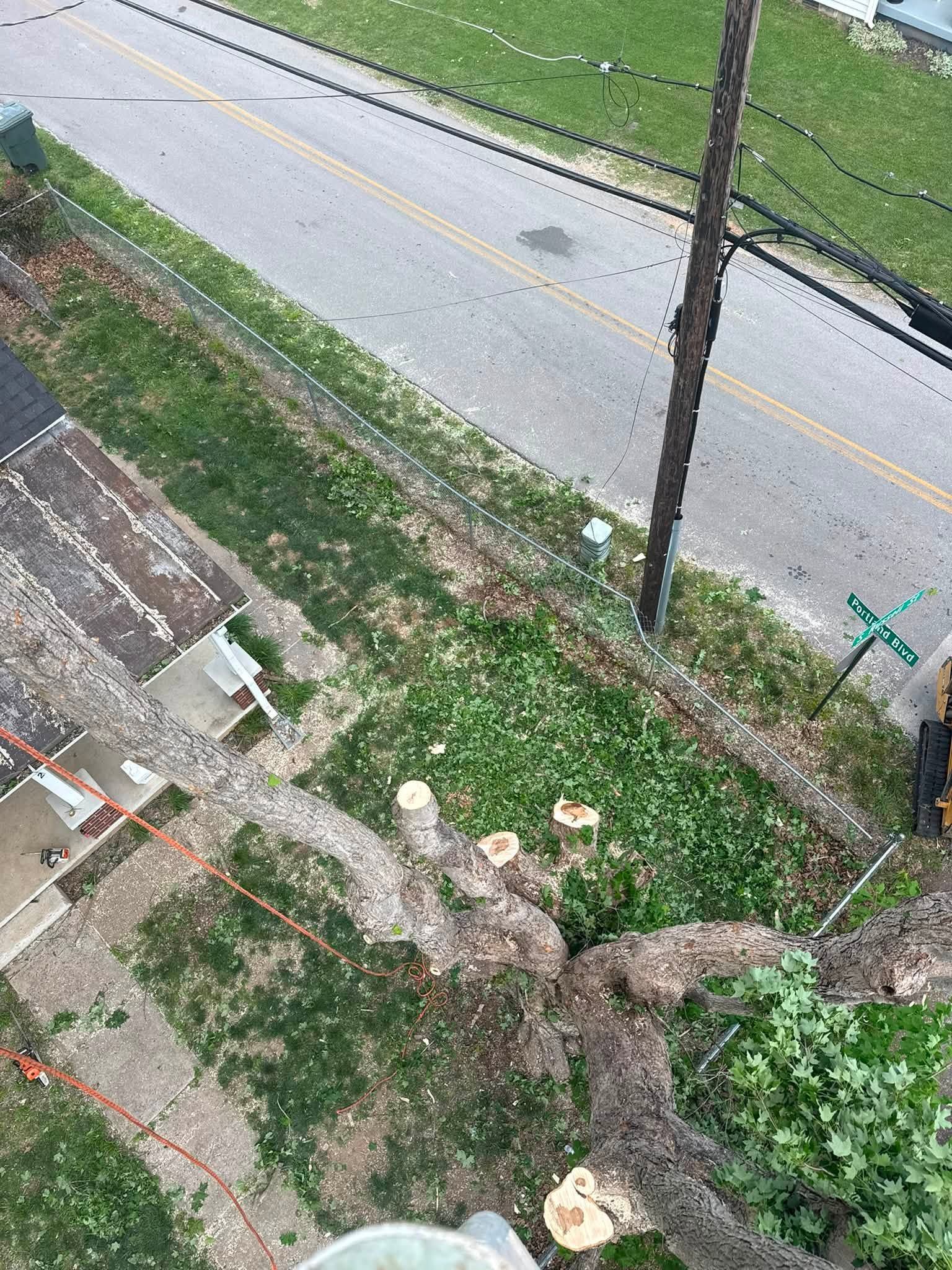
How Tree Removal Is Planned and Executed
The drop zone assessment is what separates a safe removal from one that risks the fence line or the outbuilding twelve feet away. Before any cut, the crew identifies where each section of the tree will land, what direction controls the fall, and what has to be cleared from the path. On rural lots where trees grew close to permanent structures over decades, that assessment frequently changes the cut sequence from what a standard removal would use.
After the tree is down and sectioned, the cleared area reflects the work in concrete terms: the obstruction is gone, the fence line is intact, the surrounding vegetation the owner wanted to keep is undamaged, and the debris is handled according to the pre-job agreement. For building site clearing, the result is an open footprint that the next phase of work can move into without working around downed timber. TCS Land Management posts real progress from its own jobs, so the finished condition of a comparable removal site is something you can review before committing to the work.
Stump removal is a separate scope item because not every removal requires it, and building it into every job adds cost where it adds no value. Properties where a stump can stay in a wooded area without interfering with the next use are handled differently than building sites where the stump and root mass have to come out before grading can begin.
Answers About How the Work Is Done
Tree removal on rural properties in White House involves site-specific decisions that affect how every cut is made. The questions below address the removal process and what you can expect on the job.
How does the crew determine the cut sequence for a tree near a fence or outbuilding?
The drop zone is mapped first, then cuts are planned in sections that bring the tree down away from structures in the lowest-risk order for that specific position. The sequence is set before cutting starts, not adjusted mid-job.
What happens to the debris after the tree is removed?
Debris handling is agreed before the crew begins work. Sections can be left on site, moved to a specified area, or removed entirely depending on what you need the land for after the job is done.
When is stump removal part of the scope and when is it handled separately?
Stump handling is quoted as a separate item because whether the stump needs to come out depends on what the cleared area will be used for. Building sites and driveways typically require full stump and root removal before grading; wooded areas where the stump will not interfere may not.
How does working on an older farm-edge property in White House change how a removal is planned?
Fences, outbuildings, and established vegetation close to the tree limit the available drop directions and often require sectional cutting rather than a single fell. The crew accounts for what is standing nearby before any cut is made.
What is the difference between hazard tree removal and clearing trees for a build site?
A hazard removal focuses on one tree and its specific risk to a structure or access route. Building site clearing involves sequencing multiple removals to open a defined footprint, with debris flow managed across the whole area rather than one tree at a time.
TCS Land Management also removes trees in Portland, Springfield, Gallatin, and Cross Plains. To schedule a site visit and discuss drop zone conditions, stump handling, and debris options for your property, call TCS Land Management at (615) 723-7405.