
Fence Lines Built Straight Through Rough Ground
Fence Installation in White House for acreage boundaries, privacy runs, and property-line definition through wooded or brushy terrain
Clearing the fence line is not a preliminary task on acreage properties—it is a core part of how the job is priced and built. Wooded and brushy boundary runs common on rural lots in White House require brush and small tree removal before posts can be set to a consistent spacing and alignment. TCS Land Management builds fences on these properties with a crew that already handles land clearing and tree work, so the boundary is cleared and fenced by the same team without coordinating between separate contractors. The result is a finished run that holds its line rather than bending around whatever brush the installer chose not to cut.
After the line is cleared, posts are set and spaced according to the fence type selected, with depth determined by the load the fence will carry and the composition of the ground at each post location. Rails or boards are attached after posts are set and confirmed plumb. Gates are framed as separate structures rather than simply hung between fence posts, which matters for gate swing and long-term sag resistance. Before signing any quote, confirm in writing what post depth is specified, whether line clearing is included in the price, and what gate hardware is covered.
To get a specific scope for your boundary run—including clearing, post depth, and gate placement—schedule an on-site review with TCS Land Management.
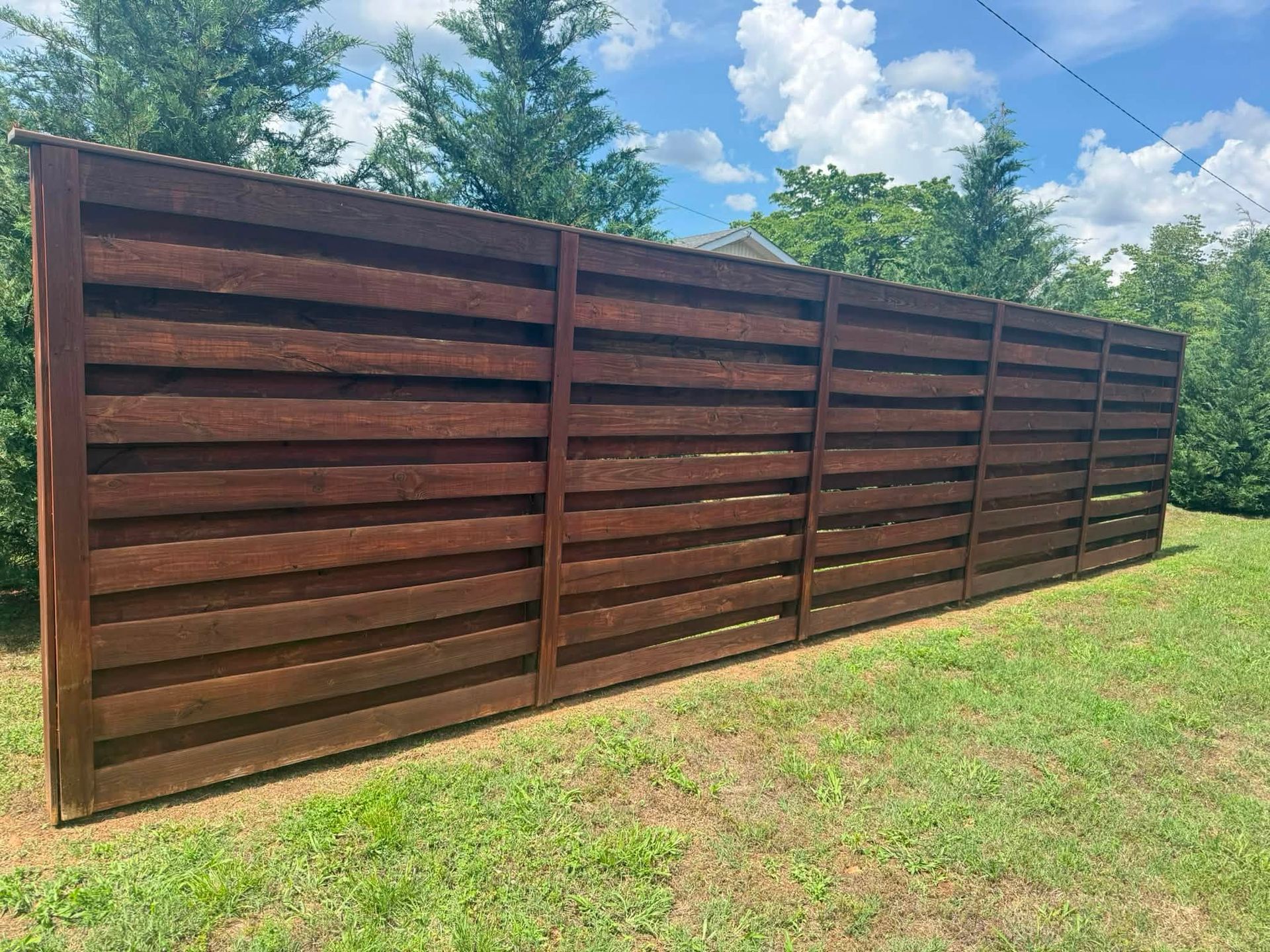
Why Line Clearing Changes How Fence Work Is Priced
Two fence quotes for the same linear footage can differ significantly when one includes brush clearing and the other does not. On a wooded lot boundary in Cross Plains or along a brushy back edge in Gallatin, the clearing work may represent a substantial portion of the total project, because without it posts cannot be placed at consistent intervals and string lines cannot be pulled straight between corners. A quote that skips clearing looks cheaper on paper but either leaves the clearing for the property owner or produces a fence that visibly wanders.
Once the line is cleared and posts are set, the finished fence has consistent bay spacing, plumb posts, and gates that open and close without binding. What you will notice immediately is a straight run from corner to corner that holds its alignment even where the terrain changes grade. What you will notice over time is that gates seated in properly framed openings do not sag and drift the way gates hung between standard fence posts tend to do after the first season of use.
Long boundary runs on acreage properties sometimes cross grade changes that require the fence to step down or follow the contour rather than running level throughout. These transitions affect post height, rail notching, and how boards are attached, and they should be identified and priced as part of the initial scope rather than treated as a change order mid-project. Identifying every gate location and the direction of swing before work begins prevents framing adjustments after posts are already set.
Answers About How the Fence Work Is Done
Questions about fence installation on rural acreage in White House tend to center on what the job actually includes and how terrain and boundary conditions affect the approach. The answers below stay focused on the work itself.
How does the crew establish the fence line before posts are set?
The line is laid out using corner stakes and string line pulled tight between them. On brushy or wooded boundaries, that process requires clearing vegetation along the run first so the string line can be pulled without deflection and post locations can be marked at consistent intervals.
What determines post depth on a fence installation?
Post depth depends on the height and weight of the fence above grade, the gate load at any framed openings, and the character of the ground at each post location. A post set too shallow in loose or sandy soil will lean under fence load before the first year is out.
Why are gates framed separately rather than hung between standard fence posts?
A gate exerts leverage at its hinge side every time it opens and closes. A post carrying that hinge load needs to be set deeper and, in many cases, braced differently than a line post carrying only lateral fence load. Hanging a gate between standard-depth line posts is a common shortcut that leads to lean and binding within a few seasons.
How does a long wooded boundary run on an acreage property in White House change the scope of a fence project?
Wooded boundaries require clearing before the line can be established, which affects both labor and debris removal. Root crowns left close to post locations can interfere with setting depth and post contact with undisturbed soil, so the clearing pass needs to account for stumps and root crowns along the intended line, not just the brush above grade.
What should a property owner confirm in writing before a fence project begins?
Confirm post depth for each fence section, whether brush and small tree clearing along the boundary is included in the quoted price, what gate hardware is specified, and how grade transitions across the run will be handled—whether the fence steps or follows the slope.
TCS Land Management also builds fences in Portland, Springfield, Gallatin, Cross Plains, and Nashville. If your property has a wooded or brushy boundary that needs to be cleared and fenced by a single crew, call TCS Land Management to walk the line and put a scope together before the project is priced.