
Old Stumps Blocking What Comes Next
Stump Grinding in White House for cleared ground ready to seed, grade, or build over
Wooded back lots and farm-edge properties in White House frequently hold stumps left from clearing done decades ago—sitting exactly where a driveway, building pad, or fence line now needs to go. TCS Land Management grinds those stumps below grade so the ground can be put to use without working around what's left. Because the owner runs the crew himself, the person who walked the property and quoted the job is the one operating the grinder on the day of the work.
The process begins with the stump grinder cutting below the finished surface elevation, not just flush with the ground. Depth matters because a stump ground only to grade will push back up through a lawn or interfere with base compaction under a pad. After grinding, the chips are raked out or left as mulch depending on what the area will be used for next—and that distinction should be confirmed in writing before the job starts, since some quotes cover grinding only and leave the chip pile for the property owner to deal with.
To review what your property needs and get a clear scope of work for chip removal and backfill, arrange a site visit with TCS Land Management.
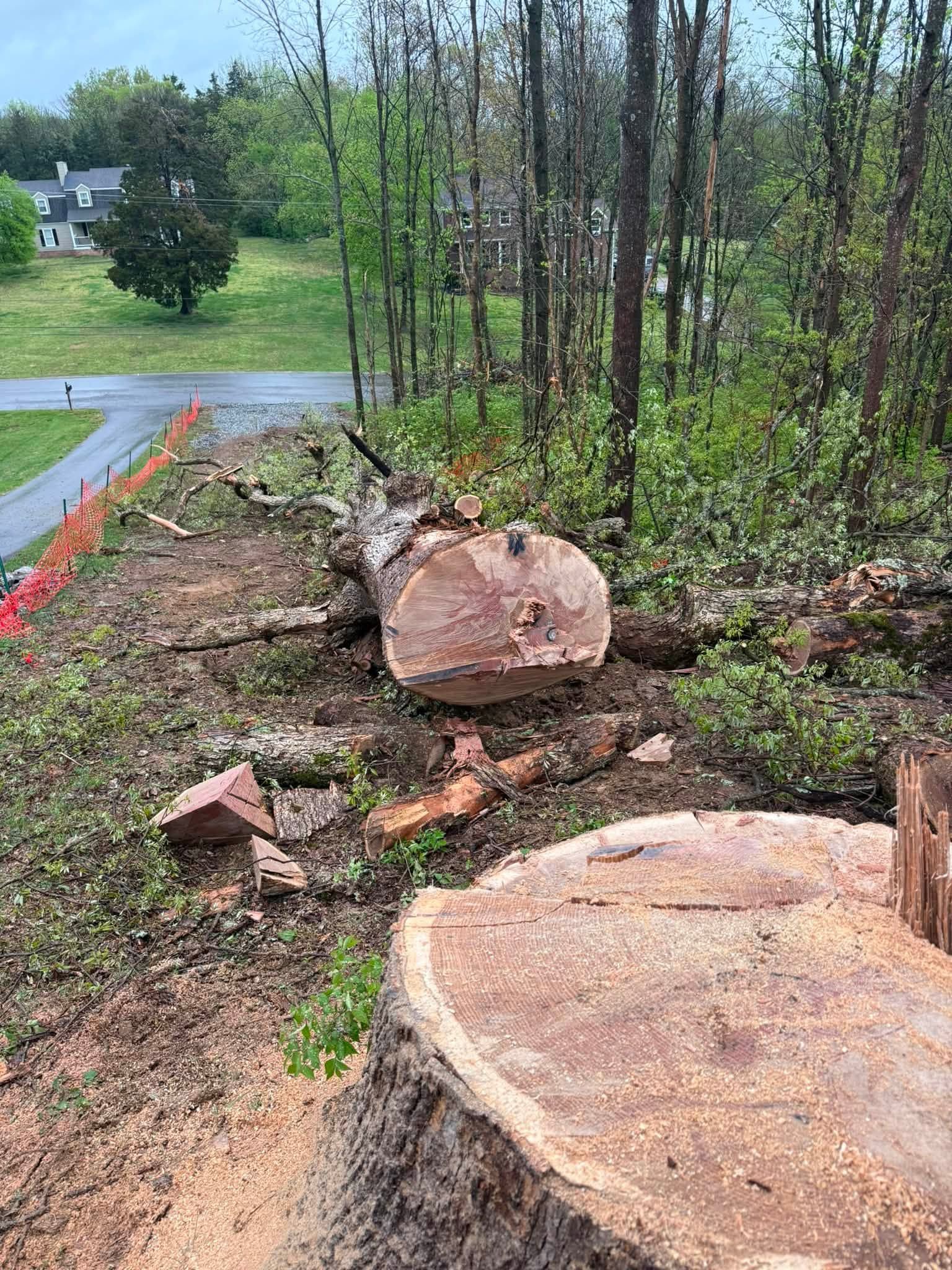
What Stump Grinding Actually Accomplishes
Grinding a stump is not the same as cutting a tree flush. The grinder works in overlapping passes across the root crown, removing wood to a depth that allows soil to be backfilled over the void without a significant depression forming as the remaining fiber breaks down. On rural lots where the stump has been sitting long enough to partially decay, the crown may be softer but the lateral roots can extend further, which affects how wide the grinding pattern needs to run to prevent future settling in a fence post hole or slab edge.
Once the work is finished, the visible result is a cleared area at or below surrounding grade with no protruding wood. If the chips are removed and the void is backfilled, the spot can be seeded immediately or included in a grading pass. If chips are left as mulch in a planting area, the material breaks down and conditions the soil over time. Either way, the obstacle that was preventing the next phase of the project is gone.
Properties with multiple stumps from a prior clearing effort are often best handled in a single mobilization—each additional stump adds time but not the full setup cost of bringing equipment to the site. It's worth inventorying all stumps before scheduling, including any that are partially buried or hidden under brush, so the quote reflects the full scope.
Common Questions About Stump Grinding Work
Property owners in White House often have specific questions about what the grinding process involves and what to expect once the work is done. The answers below cover the mechanics of the job itself.
How deep does a stump need to be ground for a building pad or driveway base?
For any surface that will be compacted and built over, the stump should be ground deep enough that the remaining fiber does not create a void or soft spot as it decomposes—typically several inches below the intended subgrade elevation, not simply flush with the surrounding lawn.
What happens to the wood chips after grinding is complete?
Chips can be raked out and hauled from the site, spread as mulch in a planting area, or left in the void as fill depending on what the ground will be used for next. Confirm which option is included in your quote before the crew arrives.
How does the condition of an older, partially decayed stump change the approach?
A stump that has been sitting on a farm-edge or wooded lot in White House for years may have a softer crown but wider lateral root spread, which means the grinding pattern often needs to extend further from center to eliminate root sections that could cause settling under a fence line or slab.
Why does post depth matter when a stump was previously located near a fence line?
Root fiber left below a fence post hole compresses and shifts as it breaks down, which can cause a post to lean or drop over time. Grinding the stump and removing the chips from the hole before setting posts prevents that movement.
What should be done to prepare the area before a stump grinder arrives on site?
Clear any rocks, wire, or debris from around the base of the stump, since hidden metal damages grinder teeth and rock can become a projectile. Mark any irrigation lines or buried utilities within the grinding radius before the crew begins.
TCS Land Management also grinds stumps in Portland, Springfield, Gallatin, and Cross Plains. If you have a stump that's sitting between your current property condition and the next project phase, contact TCS Land Management directly to confirm scope, chip handling, and scheduling before the crew is dispatched.