
Access Restored, Hazards Cleared First
Emergency Storm Work in White House for fallen trees blocking driveways, structures, and site access
A fallen tree across a long rural driveway does not just create a cleanup problem—it cuts off access entirely. On acreage properties in White House and the surrounding area, where a single drive may be the only route to a home or building site, clearing that path is the first task, not the last. TCS Land Management responds to storm calls with the owner on site running the crew, which means decisions about sequencing hazards, assessing split or leaning trunks, and determining what gets cut first are made by someone with direct experience rather than relayed through a dispatcher.
The crew begins every storm call with a hazard assessment before any cutting starts. Split trunks, trees hung up in other trees, and root balls under tension all present risks that determine the order of work. Once the assessment is complete, the priority is opening access and eliminating any immediate threat to structures. Full debris cleanup—hauling, chipping, or staging wood roadside—is scoped after the critical work is done, and property owners should confirm upfront whether the first visit includes active work or is assessment only, and whether debris haul-off is covered in the initial quote.
To report a storm situation and confirm whether the crew can mobilize to your property, call TCS Land Management directly with the location and a description of what has fallen and where.
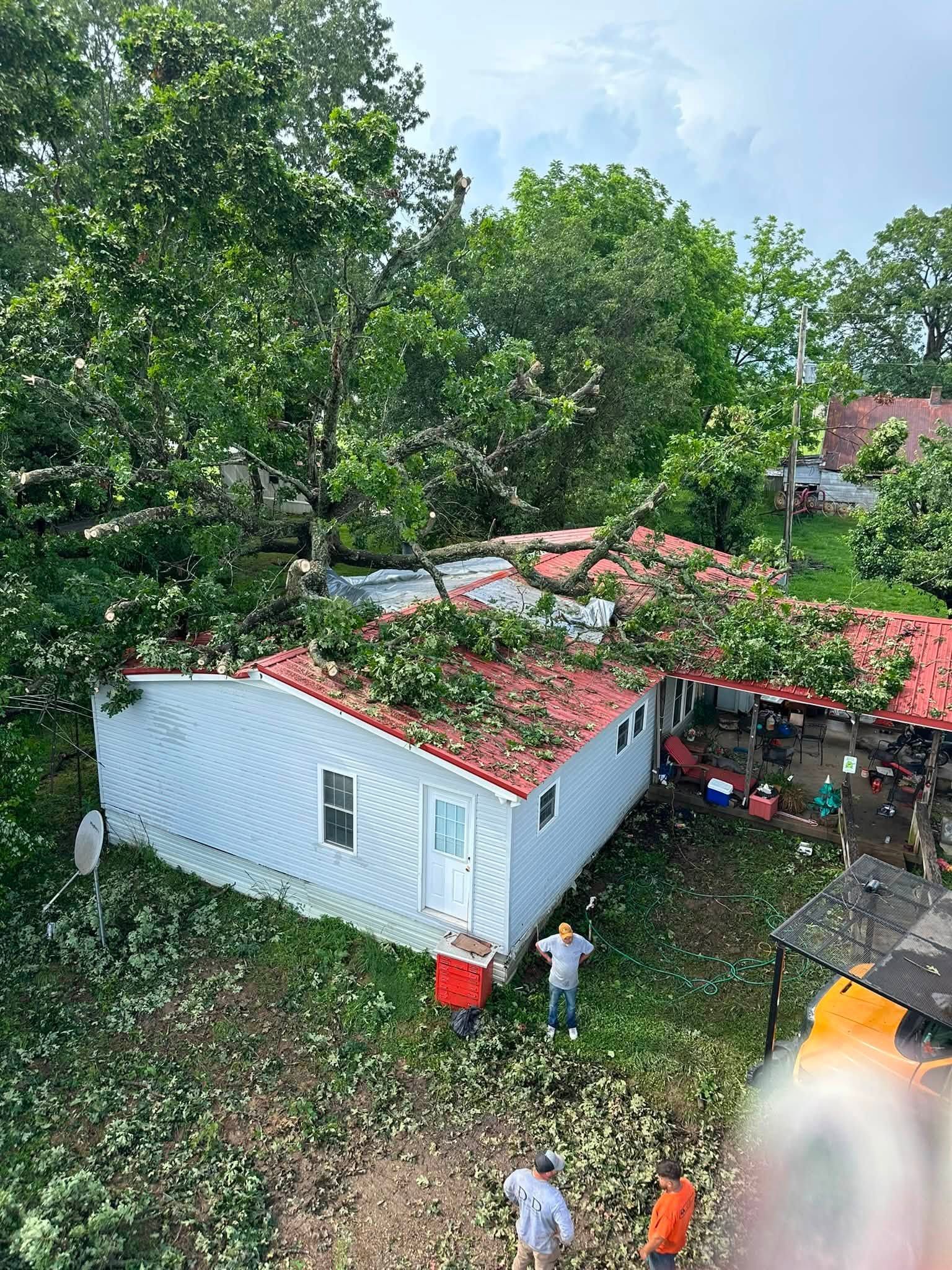
How Storm Response Is Sequenced on Site
Storm tree work differs from standard removal because the load state of fallen material is unpredictable. A tree that came down across a fence or driveway may be pinning a root ball under tension, have a split trunk holding weight in two directions, or be resting on a structure in a way that changes when the first cut is made. TCS Land Management's crew uses skid steer equipment as part of the clearing sequence, which allows heavy sections to be moved off access points without depending solely on manual lift and drag.
Once the immediate blockage is cleared and any leaning or split material is brought down safely, the property becomes accessible and the remaining scope becomes predictable. At that point, debris can be staged, hauled, or chipped depending on what the property owner needs. Wooded back lots in Cross Plains and Springfield often have secondary trees that were damaged by the fall of the primary tree, and those are identified during the initial assessment so they can be included in the full cleanup rather than discovered later.
Not every storm call requires the same equipment or the same sequence. A single tree across a driveway is a different job than multiple trees across a building site with active construction equipment blocked in. Describing the scope as accurately as possible when you call allows the crew to arrive with the right setup rather than making multiple trips.
What Property Owners Ask About Storm Tree Work
Storm damage questions often center on how the work is sequenced and what is included in the initial response versus a follow-up cleanup visit. The questions below address the process itself.
What does the crew assess before any cutting begins on a storm call?
The crew evaluates the load state of the fallen material, identifies any split or hung trunks still under tension, and checks for lines or structures the tree is in contact with before making the first cut, since the wrong cut sequence on a loaded trunk can cause secondary movement.
How is debris handled after the access is cleared?
Debris handling depends on what was agreed in the scope—material can be staged at the roadside, hauled from the property, or left in sections for the property owner to split. Confirm which option applies to your job before the crew arrives so there is no ambiguity about what remains on site when they leave.
Why does a skid steer make a difference in storm tree removal?
A skid steer allows large trunk sections and root balls to be moved off driveways and building pads mechanically rather than cut into smaller and smaller pieces to make them movable by hand, which saves time and reduces the number of cuts made near a structure or tight access point.
How does a long rural driveway in White House change storm response priorities?
When a driveway is the sole access route to a home or active build site, clearing a passable path takes precedence over a complete cleanup, because restoring access also restores the ability to bring additional equipment or emergency vehicles to the property if needed.
What should a property owner do before the storm crew arrives to make the job safer and faster?
Keep people and animals away from the fallen area, do not attempt to move or cut the material yourself if any part of it appears to be under tension or in contact with a structure, and note whether any buried utilities or irrigation lines run near where the tree came down.
TCS Land Management also handles emergency storm work in Portland, Springfield, Gallatin, and Cross Plains. To get the crew moving toward your property after storm damage, call TCS Land Management with your address and a description of what is blocking access or threatening a structure.